
A Clearer Institutional Framework for Biomethane
Serbia’s biomethane sector is gaining a clearer institutional framework. Work on secondary legislation for biomethane began over the past year and is currently underway. With interest from operators and investors already evident, this marks an important step towards clearer conditions for project development, revenue planning and long-term investment decisions.
Building on Serbia’s Existing Biogas Sector
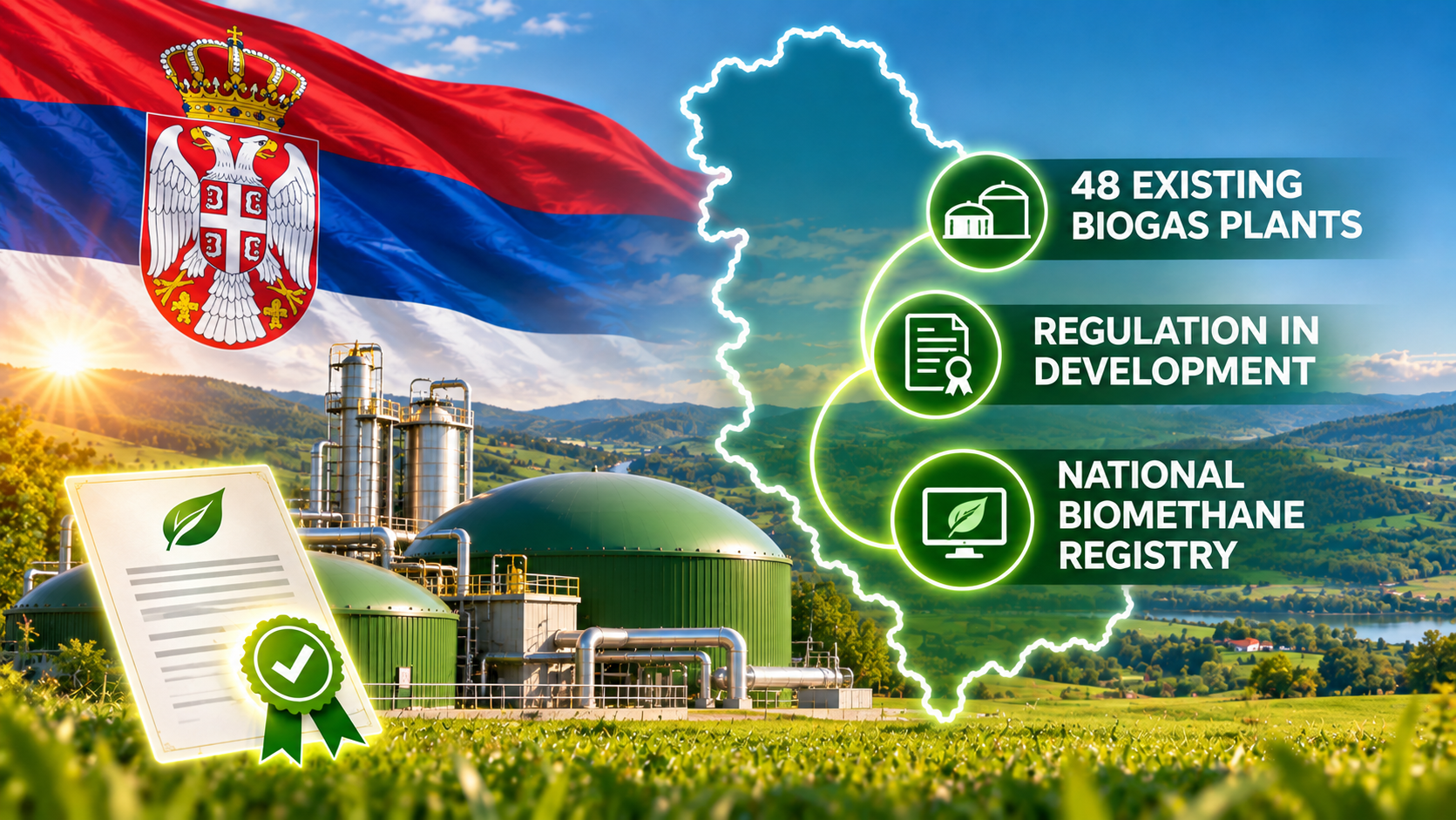
Serbia currently has 48 biogas plants, but biomethane production has yet to begin. These facilities represent more than fifteen years of sector development, during which operators have built relationships with farms and industry, established supply chains and developed operational expertise. This provides a foundation for the next phase of development, drawing on existing resources and experience.
For operators whose plants are no longer covered by feed-in tariffs, finding a viable business model has become essential to their future operations. Three biogas plants are already outside the scheme, prompting consideration of conversion to biomethane as a way to sustain production and preserve the value of previous investments. Meanwhile, interest in greenfield projects reflects opportunities to develop new capacity, aligning plant design from the outset with feedstock availability, delivery options and prospective buyers’ needs.
Investment Conditions and Economic Viability
Translating this interest into investment requires regulatory progress to go hand in hand with project viability. Indicative revenue requirements of approximately EUR 105/MWh for converted plants and EUR 115/MWh for new facilities highlight the importance of offtake arrangements and support mechanisms. These figures provide a starting point for assessment; actual viability will depend on feedstock costs, capital expenditure, connection costs and agreed sales terms. Long-term relationships with buyers will therefore be as important as the availability of production capacity.
Towards a National Biomethane Registry
Alongside rules governing production and market access, attention is turning to the establishment of a biomethane registry. As an emerging market, Serbia has an opportunity to align regulatory requirements, production records and future certification arrangements from the outset. Under the approach being explored through BIOMAPE, development would begin with a production data registry, or Type 5 model, followed by the introduction of certificate issuance functions. The long-term objective would be a fully integrated Type 7 registry with interoperability with European systems.
This phased approach would allow the registry to evolve alongside the domestic market while preparing for future trade. For investors and buyers, reliable production data and credible evidence of origin and sustainability will be essential to building market confidence.
Turning Biomethane Potential into Market Opportunities
The development of secondary legislation is therefore a key step towards translating Serbia’s production potential into viable projects. Building on this foundation, biomethane can offer new opportunities for existing operators and new investors alike, turning domestic agricultural resources and organic residues into renewable gas, greater security of supply and lasting value for local communities.

