News

Biomethane in Serbia – Regulatory Progress Opens New Market Opportunities

A Clearer Institutional Framework for Biomethane

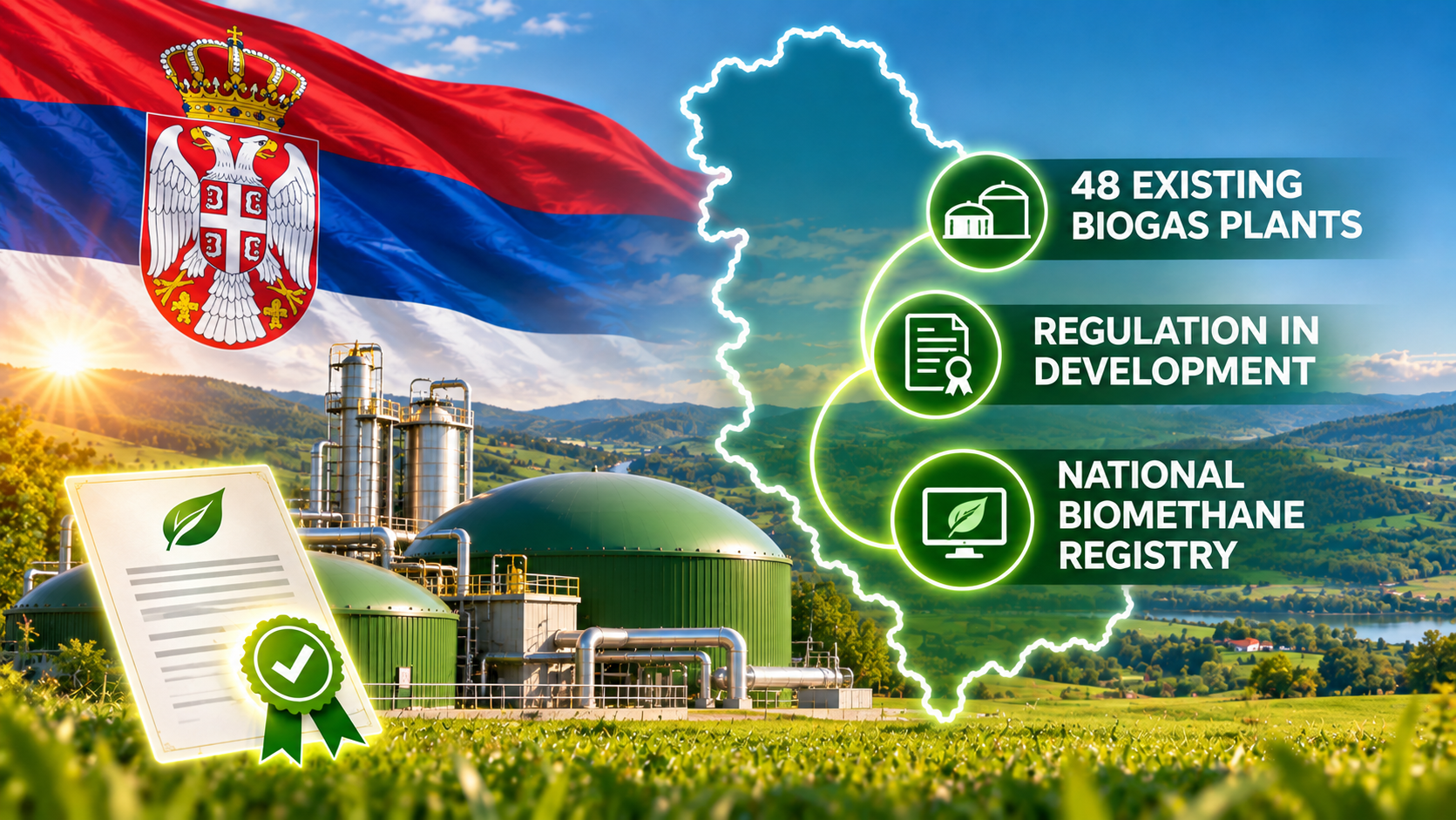
Serbia’s biomethane sector is gaining a clearer institutional framework. Work on secondary legislation for biomethane began over the past year and is currently underway. With interest from operators and investors already evident, this marks an important step towards clearer conditions for project development, revenue planning and long-term investment decisions.

Building on Serbia’s Existing Biogas Sector

Serbia currently has 48 biogas plants, but biomethane production has yet to begin. These facilities represent more than fifteen years of sector development, during which operators have built relationships with farms and industry, established supply chains and developed operational expertise. This provides a foundation for the next phase of development, drawing on existing resources and experience.

For operators whose plants are no longer covered by feed-in tariffs, finding a viable business model has become essential to their future operations. Three biogas plants are already outside the scheme, prompting consideration of conversion to biomethane as a way to sustain production and preserve the value of previous investments. Meanwhile, interest in greenfield projects reflects opportunities to develop new capacity, aligning plant design from the outset with feedstock availability, delivery options and prospective buyers’ needs.

Investment Conditions and Economic Viability

Translating this interest into investment requires regulatory progress to go hand in hand with project viability. Indicative revenue requirements of approximately EUR 105/MWh for converted plants and EUR 115/MWh for new facilities highlight the importance of offtake arrangements and support mechanisms. These figures provide a starting point for assessment; actual viability will depend on feedstock costs, capital expenditure, connection costs and agreed sales terms. Long-term relationships with buyers will therefore be as important as the availability of production capacity.

Towards a National Biomethane Registry

Alongside rules governing production and market access, attention is turning to the establishment of a biomethane registry. As an emerging market, Serbia has an opportunity to align regulatory requirements, production records and future certification arrangements from the outset. Under the approach being explored through BIOMAPE, development would begin with a production data registry, or Type 5 model, followed by the introduction of certificate issuance functions. The long-term objective would be a fully integrated Type 7 registry with interoperability with European systems.

This phased approach would allow the registry to evolve alongside the domestic market while preparing for future trade. For investors and buyers, reliable production data and credible evidence of origin and sustainability will be essential to building market confidence.

Turning Biomethane Potential into Market Opportunities

The development of secondary legislation is therefore a key step towards translating Serbia’s production potential into viable projects. Building on this foundation, biomethane can offer new opportunities for existing operators and new investors alike, turning domestic agricultural resources and organic residues into renewable gas, greater security of supply and lasting value for local communities.
Zero Rating under Carbon Pricing: Austria Recognises Sustainable Biomethane in the EU ETS, ETS 2 and the National Emission Certificate Scheme

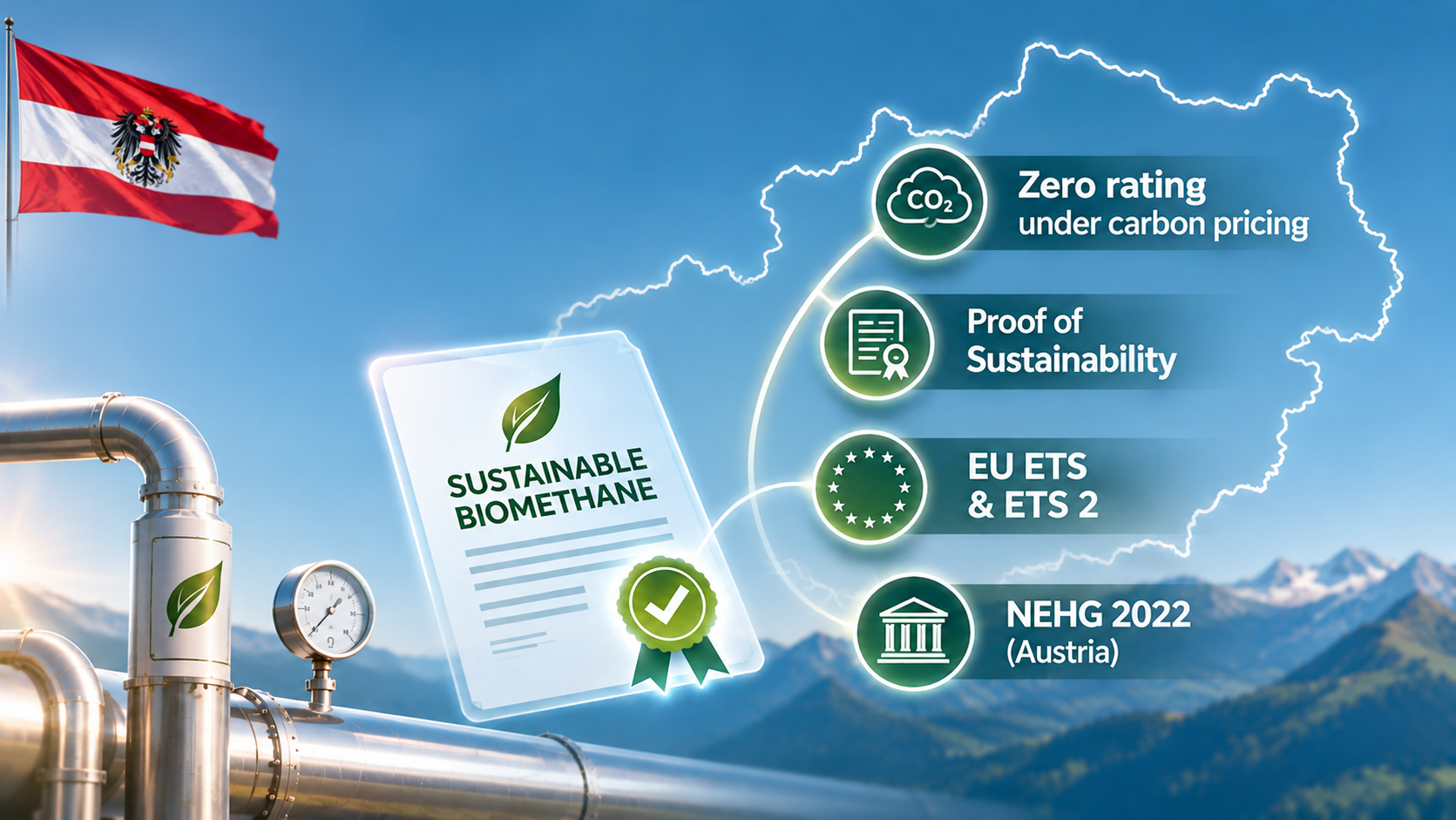
The Federal Ministry of Finance has confirmed that biomethane with a proof of sustainability under the Renewable Energy Directive is rated at zero under Austrian carbon pricing and remains outside the scope of the forthcoming ETS 2, which turns sustainability documentation into a direct fiscal asset for producers, suppliers and customers.

Carbon Pricing and the Role of Sustainability Documentation

For biomethane, the economic effect of carbon pricing is decided by the question, whether the carbon contained in the gas is rated at zero. Where the rating succeeds, the fuel is spared the cost of emission certificates and its competitive position against natural gas improves with every rise of the carbon price. In the European Union this question is answered through sustainability documentation, because the zero rating is available only for biomass that complies with the sustainability and greenhouse gas saving criteria of the Renewable Energy Directive.

Recognition of Sustainable Biomethane under the EU ETS

Under the established EU ETS for stationary installations and energy generation, operators may assign an emission factor of zero to biomass fuels, including biomethane, only where the fuel complies with these criteria and a Proof of Sustainability issued under a voluntary scheme recognised by the European Commission is available. The Monitoring and Reporting Regulation 2018/2066, most recently amended in September 2024, aligns the monitoring obligations of the EU ETS with the Renewable Energy Directive and extends the documentation requirements to the regulated entities of the future ETS 2. In Austria, recognition under the EU ETS is possible only through the purchase of sustainable biomethane, and where biomethane is balanced via the public gas network, double counting must be excluded.

ETS 2: Zero Rating and Regulatory Requirements

The second relevant system is the ETS 2, created with Directive (EU) 2023/959 as a separate European emissions trading system for fuels used in buildings, road transport and additional sectors. The obligation rests upstream with the fuel suppliers, who pass the cost on in their prices. Monitoring and reporting obligations have applied since 2025. The market phase, originally foreseen for 2027, was postponed by one year to 2028 following the agreement of the European co-legislators of November 2025, which was formalised through Regulation (EU) 2026/667, in force since April 2026. For biomethane, the Federal Ministry of Finance has now confirmed the decisive principle. Where a Proof of Sustainability under the Renewable Energy Directive is available for the biomethane quantities used and the requirements of the Monitoring and Reporting Regulation are met, no emission certificates must be acquired for these gas quantities. Biomethane therefore remains outside the scope of the ETS 2, and the Federal Ministry of Finance has confirmed the same for the Austrian national system that will be transferred into it.

Austria’s National Emission Certificate Scheme (NEHG 2022)

That national system (NEHG 2022) has priced the carbon content of fuels for buildings and road transport since 2022 and remains in force until the market phase of the ETS 2 begins, at a fixed price of EUR 55 per tonne of CO2 in 2026. In practice, the zero rating under the NEHG was previously tied to the linkage with the Austrian natural gas levy act, which made the fiscal recognition of biomethane difficult. This linkage is no longer a mandatory precondition. The applicable requirements are now those of the Monitoring and Reporting Regulation 2018/2066, on which both the ETS 2 and the current version of the NEHG rely. An amendment of the implementing regulation, published on 30 December 2025, specifies the evidence required for the zero rating of carbon shares, and the Federal Ministry of Finance explicitly requires a Proof of Sustainability conforming with the Renewable Energy Directive. Because the trading participants have had to align their monitoring plans with the Monitoring and Reporting Regulation since 1 June 2024, the emission reports for the 2025 reporting year must follow that regulation, and the zero rating therefore already applies to the 2025 reporting year.

Proof of Sustainability: Certification and Traceability Requirements

The zero rating is subject to strict conditions that concern the entire supply chain. Any double use of a Proof of Sustainability must be excluded, the documentation along the chain from the feedstock to the delivered gas must be complete and consistent, and producers as well as traders of blended biomethane must be registered and certified under a voluntary scheme recognised by the European Commission, because only certified economic operators may issue and pass on Proofs of Sustainability. The Proof of Sustainability thereby becomes the central document of the Austrian biomethane market, since it is the key that unlocks the fiscal advantage in all three systems.

Market Opportunities for Producers, Suppliers and Customers

For the market participants, the confirmed legal situation opens concrete business opportunities. Gas suppliers and energy traders can develop biomethane products in which the cost factor of carbon pricing is reduced or fully avoided, and industry and heat customers receive a clear incentive to switch to biomethane, because they avoid the additional burden that the ETS 2 or the NEHG would otherwise place on fossil gas. For the Austrian biomethane producers, it is worthwhile to extend their offers along the value chain, because the benefit of the zero rating grows with every reliably certified biomethane flow.


Sources and Further Reading

One Terawatt Hour, EUR 560 Million: A Study by the Austrian Energy Agency Quantifies the Economic Value of Biomethane Expansion in Austria

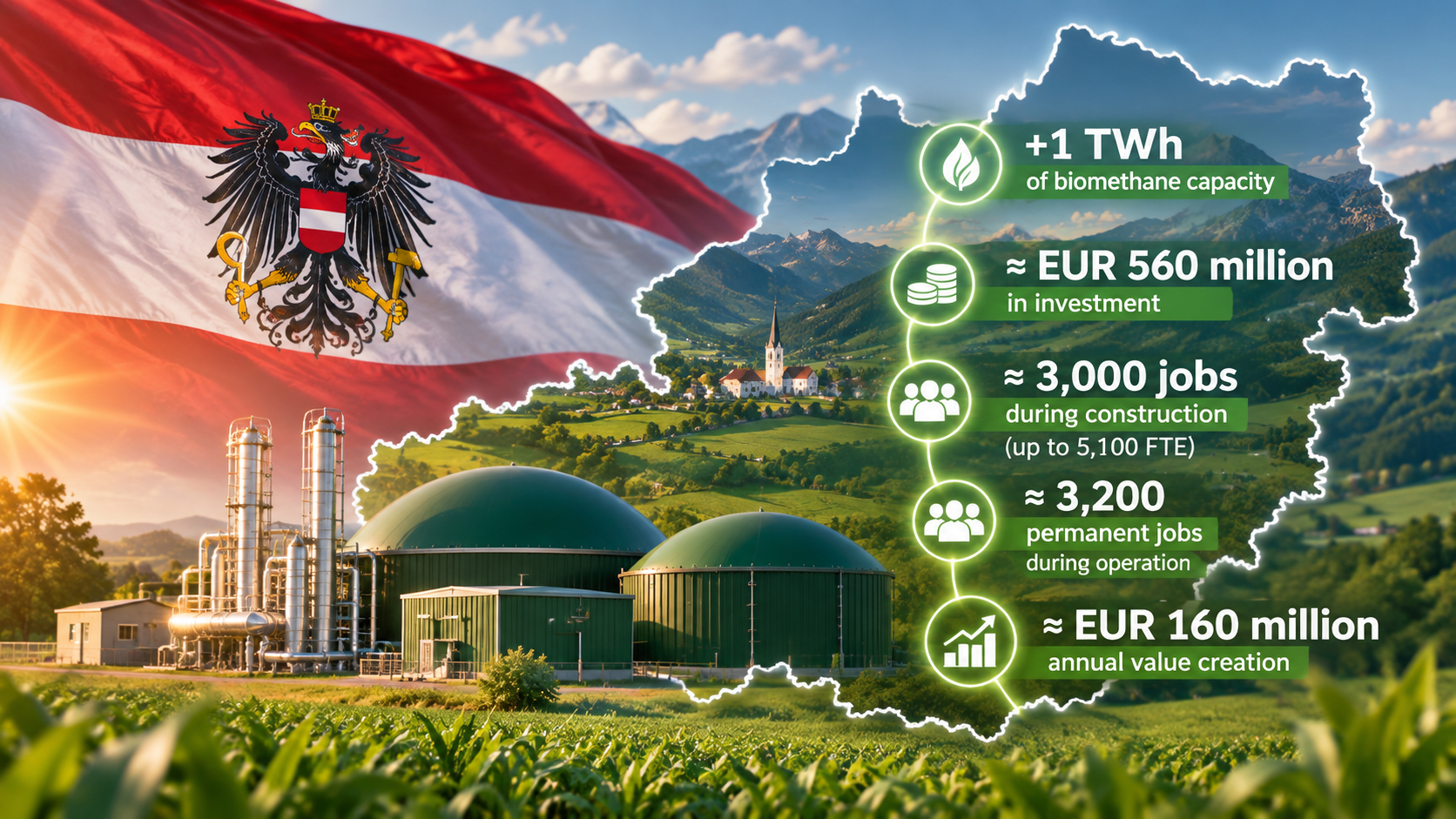
A study by the service agency for renewable gas operated by the Austrian Energy Agency shows that each additional terawatt hour of biomethane capacity unlocks around EUR 560 million in investment and thousands of jobs, and it comes at a good moment within the current debate about funding renewable energy while energy prices remain generally high.

Quantifying the Economic Impact of Biomethane Expansion

In May 2026, the service agency for renewable gas operated by the Austrian Energy Agency presented a study that quantifies the macroeconomic contribution of a defined expansion step in Austrian biomethane production. The central findings cover investment, employment, tax returns and value creation, and they are calculated for the construction and the operation of capacity producing one additional terawatt hour of biomethane per year.

Investment, Employment and Long-Term Value Creation

According to the study, the investment of approximately EUR 560 million flows above all into construction, machinery and plant engineering, which brings around 3,000 jobs, and the detailed figures indicate a one-off employment effect of up to 5,100 full-time equivalents during the investment phase. The investment phase alone returns on average around EUR 140 million in taxes and levies to the public budget, and the operation of the capacity adds roughly EUR 55 million per terawatt hour each year. The operational effect builds on this, because each additional terawatt hour in operation secures some 3,200 permanent full-time positions on a lasting basis and generates the annual value creation of approximately EUR 160 million.

Building the Economic Case for Biomethane Across Europe

The study thus transforms a debate about targets into a debate about measurable economic returns, and it equips the Austrian sector with arguments that go beyond climate policy alone. Beyond Austria, the methodology of quantifying investment, employment, tax returns and value creation per terawatt hour can readily be applied in other European countries, so that countries developing their own biomethane markets can build a national investment case on a comparable factual basis and replicate the positive economic effect that the study shows for Austria.


Sources and Further Reading

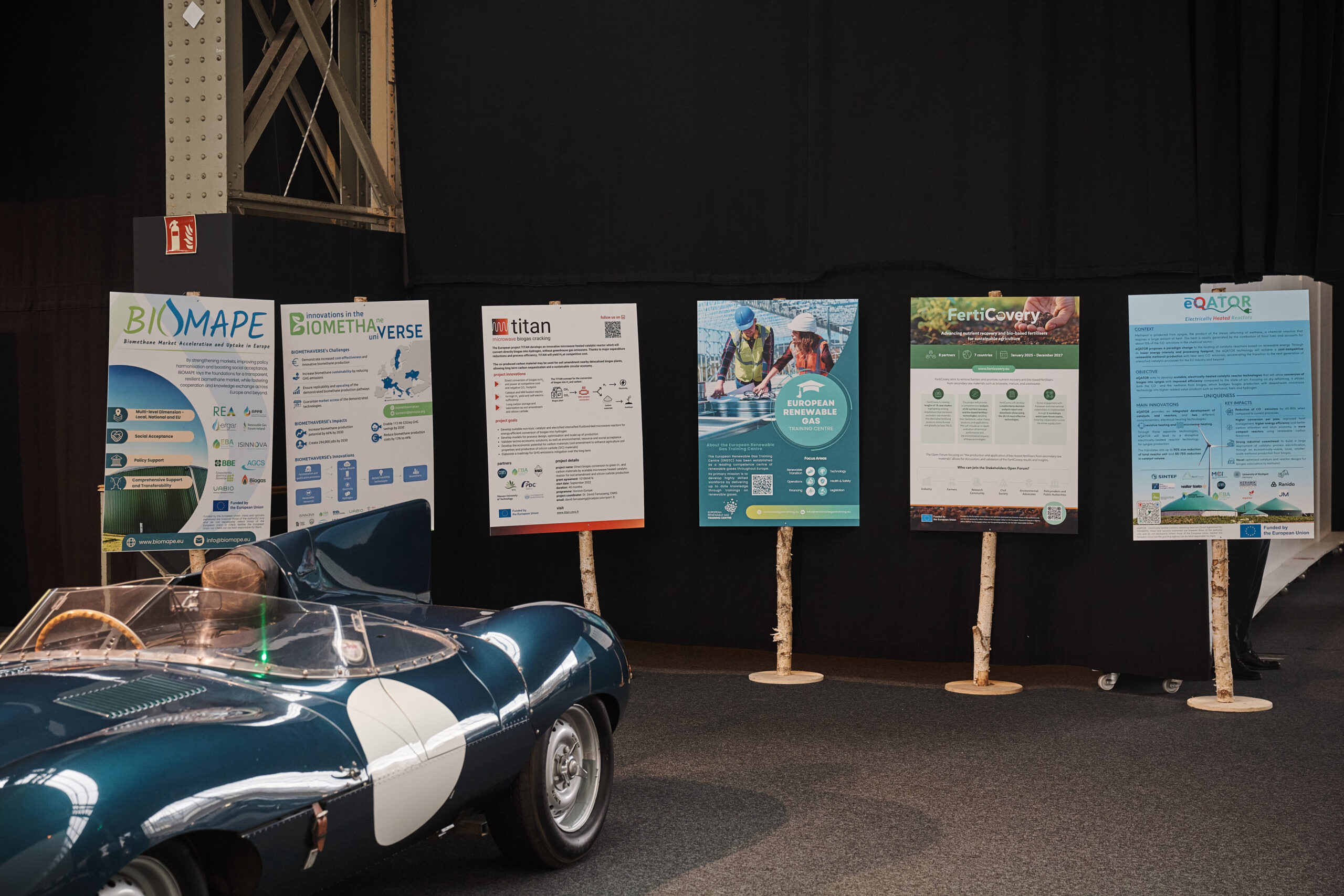
BIOMAPE at the European Biogas Conference 2026

BIOMAPE connected with the European biomethane community during the European Biogas Conference 2026, contributing to the exchange of perspectives on renewable gas market development and the future of biomethane in Europe.

On 13–14 October 2026, the European Biogas Conference brought together stakeholders from across the renewable gas sector in Brussels, as part of the European Biomethane Week.

The event provided an important platform for dialogue among industry representatives, policymakers, researchers and other actors working to advance the production and use of biogas and biomethane across Europe.

Connecting with the European Biomethane Community

Through its participation, BIOMAPE had the opportunity to engage with the wider European biomethane community and contribute to discussions on the future of renewable gases.

The conference highlighted the importance of collaboration, knowledge exchange and coordinated action to address the challenges affecting the sector.

For BIOMAPE, these exchanges are particularly relevant to the project’s work on biomethane market development, policy alignment and the conditions needed for wider uptake across European countries.

Supporting a More Integrated Biomethane Market

BIOMAPE aims to contribute to a stronger and more transparent European biomethane market by addressing regulatory, technical and social barriers.

Engagement with sector stakeholders and participation in European initiatives provide opportunities to share the project’s objectives, exchange experiences and strengthen connections with actors working towards common goals.

As the project progresses, collaboration across the biomethane value chain will remain essential to supporting market integration, stakeholder involvement and the development of effective solutions for biomethane deployment.

Learn more about BIOMAPE and its activities: www.biomape.eu

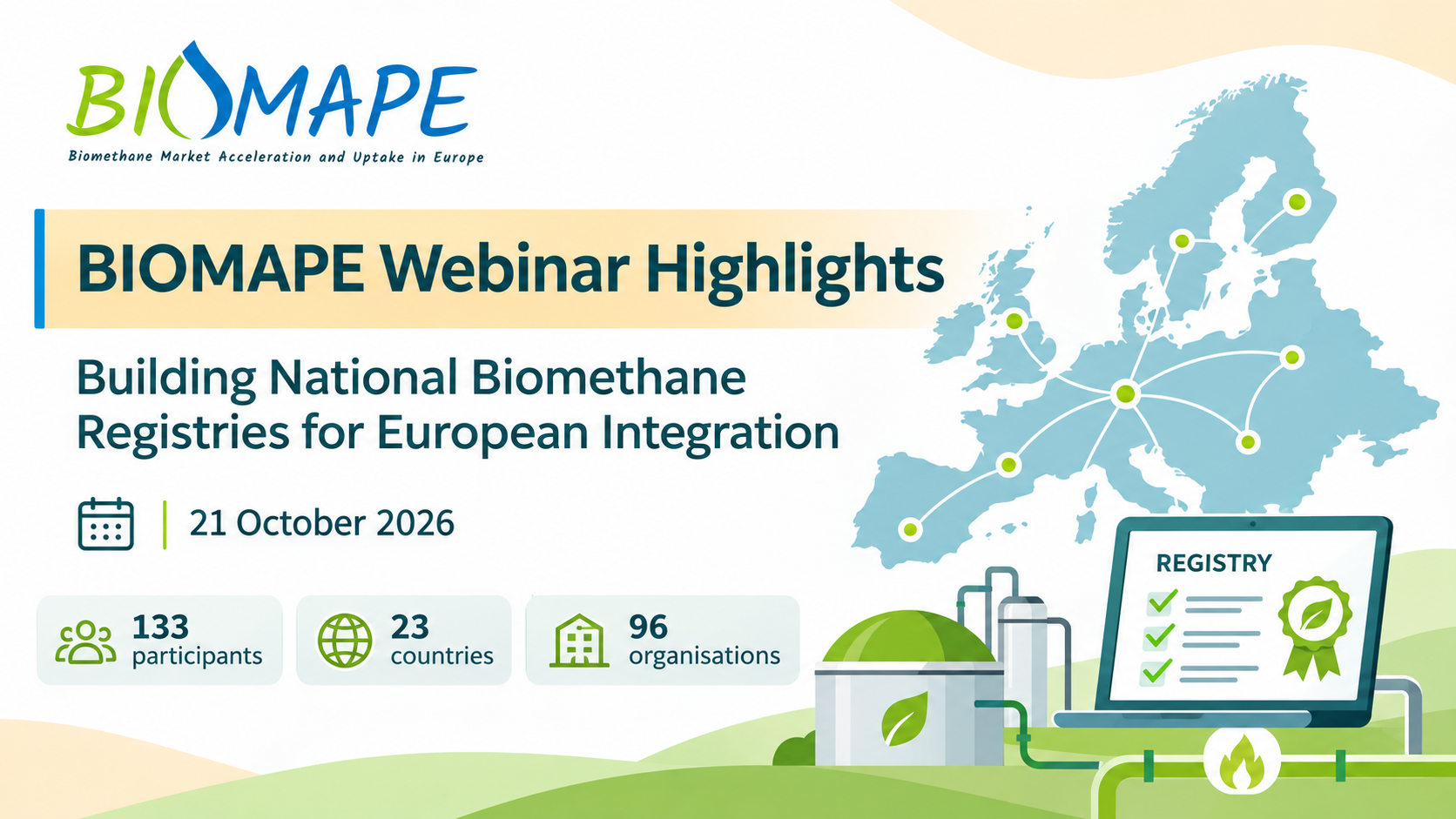
Webinar Recap, 21 October 2026: Building National Biomethane Registries for European Integration

Building the Foundations of a Functioning Biomethane Market

Biomethane is one of the great opportunities of the European energy transition, since the resource is available, the technology is mature and the existing gas infrastructure can be used. What is still missing in many countries is the market infrastructure that turns this potential into a functioning market. Reliable national registries and credible certificates are the tools that make biomethane countable, tradable and bankable. This was the common thread of the BIOMAPE webinar on 21 October 2026, which brought together 133 participants from 23 countries, representing 96 organisations, including public authorities, registry operators, producers, traders and industry associations.

The EU Perspective: Introducing the Biomethane Mechanism

The first session was dedicated to the EU perspective. Mikolaj Jasiak, Team Leader in Unit F.1 Diversification Strategy and Joint Purchasing at the European Commission, DG Energy, presented the Biomethane Mechanism under the EU Energy and Raw Materials Platform, which the Commission launched in June 2026. As a new type of policy instrument, the mechanism is a free and voluntary platform that brings supply and demand together. From 4 November 2026, buyers can submit their demand, specifying volumes, certificate requirements and delivery options, and sellers will be able to respond with matching offers from late January 2027. A regulatory dashboard explains, in one place, the requirements of the eight member states covered so far, Denmark, France, Germany, Italy, the Netherlands, Poland, Spain and Sweden, with Portugal, Austria, Hungary and Romania to follow in the next iteration. In the live poll, more than 90 per cent of participants stated that they intend to register with the mechanism, and the regulatory dashboard was considered its most valuable function.

National Registry Development: Insights from Five BIOMAPE Focus Countries

The second session gave the five BIOMAPE focus countries (Hungary, Portugal, Serbia, Slovenia and Ukraine) the floor, and their presentations drew a differentiated picture of European registry development. Hungary has designated its regulatory authority as registry operator and joined the AIB scheme, but production is still exported to Western Europe in the absence of a national support scheme. Portugal operates a fully functional guarantee of origin registry since 2024 and expects its market to scale from one to around six plants, with 40 projects in licensing. Serbia, which has a solid biogas sector but no biomethane production yet, sees a greenfield advantage, as the registry can be designed from the start, following the phased pathway that BIOMAPE recommends, from a production data core towards a fully integrated system. Slovenia is preparing both a renewable gas registry, with establishment starting on 1 January 2027, and a dedicated support scheme, two prerequisites for a market that has not yet started. Ukraine combines an estimated production potential of up to 21.8 bcm per year with an operating registry in trial mode, and is evolving towards a system that separates guarantees of origin from proofs of sustainability, in preparation for connection to European systems.

BIOMAPE Deliverable D2.1: Guidelines for National Biomethane Registries

The third session presented the results of the BIOMAPE Deliverable D2.1, the updated guidelines for establishing national biomethane registries for certificate management, which are available on the BIOMAPE website. The report defines the common attribute layers of renewable gas certificates, describes the business processes and roles of a registry, and introduces a typology of seven registry system types. Its country mapping covers, in total, 18 European countries, among them the BIOMAPE Lead countries (Austria, Ireland and the United Kingdom), the Focus countries (Hungary, Portugal, Serbia, Slovenia and Ukraine) and further European reference markets. Four of these types reflect the historically grown landscape of issuing bodies, biofuel registries, hybrid and parallel systems. The production database, the data centre and the fully integrated registry system are the three forward-looking proposals of BIOMAPE. Together these form a blueprint for two situations. Countries that already operate parallel systems can streamline their data flows without replacing their registries, and countries that are building their structures now are advised to aim at a fully integrated system from the start. The subsequent guided discussion addressed social acceptance, which showed the full breadth of the focus country experience, from local protests against biogas installations to strong governmental support through a national bioenergy coordination council.

Looking Ahead: Towards an Integrated European Biomethane Market

The event closed with a clear outlook. The untapped potential of biomethane is held back above all by the missing digital market infrastructure and by hindrances in cross-border transfer. Interoperability between registry systems, within the European Union and with connected countries, is therefore the central task ahead, and the EU Biomethane Mechanism was recognised as a clear signal that the European Commission regards biomethane as an integral part of Europe’s energy security. The next milestone of the work package will be a handbook for economic operators on the European cross-border trade of biomethane certificates, expected around mid-2027. Countries and stakeholders interested in BIOMAPE’s support are invited to get in touch via the project website.

Explore the webinar materials

Missed the webinar or want to revisit the discussions?

Our project partner, the European Renewable Gas Registry (ERGaR), has made the webinar resources available online, including:

The webinar forms part of BIOMAPE’s efforts to support the development of national biomethane registries and facilitate certificate management and cross-border trade, contributing to a more transparent and integrated European biomethane market.

Developing Slovenia’s biomethane market

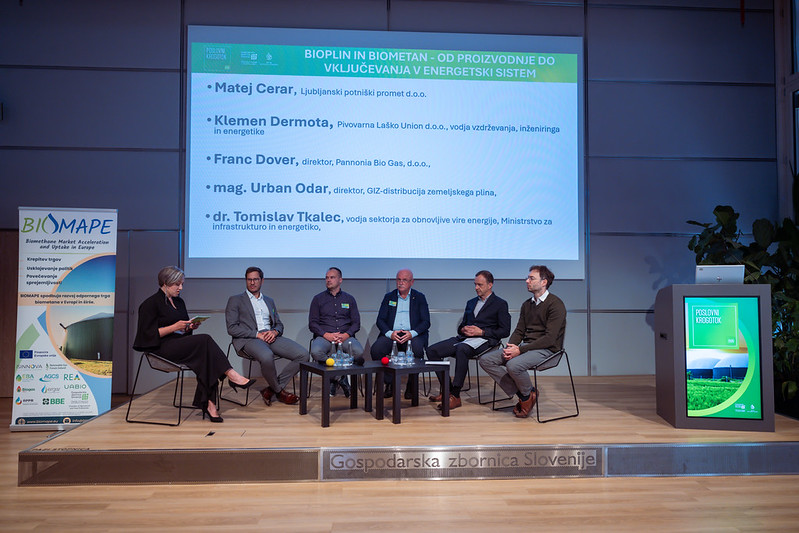
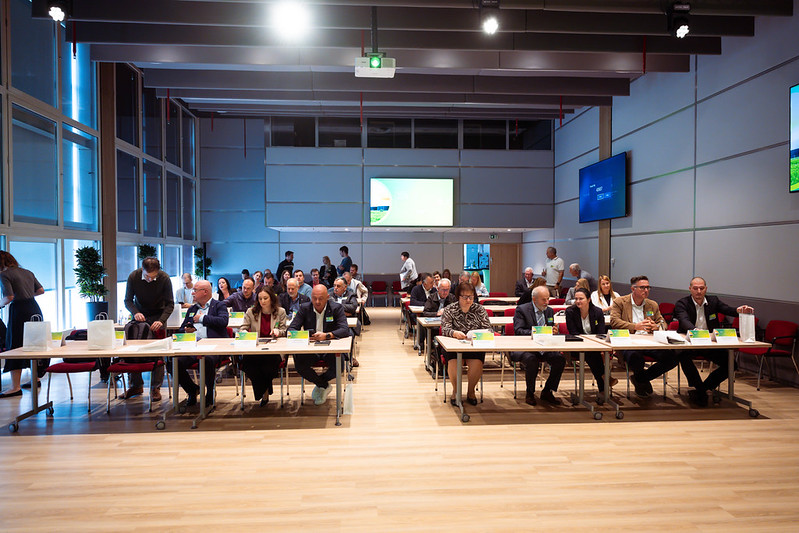
During the annual conference of the Slovenian Biogas Association, held on 22 September 2026, CCIS-CAFE, a partner in the BIOMAPE consortium, organised a high-level roundtable on the future of biomethane in Slovenia.

The event brought together stakeholders from across the biomethane value chain, including potential producers, industrial users interested in renewable gas solutions, public transport representatives already using biomethane, the Ministry responsible for energy policy, and the association of natural gas distributors working to integrate domestically produced biomethane into the gas network.

The discussion focused on Slovenia’s strong potential for biomethane production and on the growing interest from both industry and the transport sector in using renewable gas. Participants exchanged views on market opportunities, infrastructure needs and the contribution biomethane can make to emissions reduction, energy security and circular resource use.

A key topic was the policy framework required to support market development. The roundtable highlighted the need for clear regulatory conditions, targeted support mechanisms and long-term investment certainty to help unlock Slovenia’s biomethane potential.

The event confirmed that biomethane is gaining attention across sectors. Continued cooperation between policymakers, producers, infrastructure operators and end-users will be essential to transform this potential into a functioning national market.

This dialogue is closely aligned with BIOMAPE’s wider objective: supporting biomethane uptake in Europe by addressing policy, market, certification and social acceptability dimensions across different national contexts.

By connecting stakeholders and promoting exchange between sectors, the roundtable represents an important step towards a stronger and more integrated biomethane landscape in Slovenia and beyond.

Autumn Biogas Masterclass Series 2026

The European Biogas Association, through the European Renewable Gas Training Centre, is promoting a series of in-person masterclasses covering the full biogas value chain: from plant operations and technological innovation to future markets and financial optimisation.

The European Biogas Association (EBA), through the European Renewable Gas Training Centre (ERGTC), is launching the Autumn Biogas Masterclass Series 2026, a cycle of four in-person masterclasses designed for professionals, operators and stakeholders active in the biogas and biomethane sector.

Taking place between September and December 2026, the series will offer an in-depth learning path across the full biogas value chain: from the optimisation of production processes and plant performance to advanced technologies, market developments and financial tools supporting the growth of the sector.

The courses represent a particularly relevant training opportunity for the BIOMAPE communities, both committed to strengthening the role of biomethane in Europe’s energy transition and promoting innovative solutions to accelerate its uptake.

Upcoming masterclasses

17–18 September 2026, Brussels
Two-Day Operator Course + Plant Visit | Optimising the biogas and biomethane production process
A two-day hands-on operator course, combining expert-led training and a guided plant visit, focused on optimising biogas and biomethane production processes. Participants will explore the full pathway from feedstock input to biomethane upgrading, with a focus on process stability, methane yields and improved plant performance.

12 October 2026, Brussels
Masterclass | Advanced biogas technologies for next-generation plant performance
A masterclass dedicated to the emerging technologies that are helping transform the sector, including artificial intelligence tools, pre-treatment technologies, CO₂ valorisation, biofuels, biochar and new solutions to improve operational efficiency and carbon management.

11 November 2026, Hannover
Masterclass | Improved operations and future markets in the biogas sector
A session focused on optimising anaerobic digestion processes, improving methane yields and providing an up-to-date overview of market trends and the European policy landscape. The masterclass will take place during EnergyDecentral 2026 in Hannover.

10 December 2026, Brussels
Masterclass | Optimising financial performance and developing Biogas Purchase Agreements
A masterclass dedicated to the financial performance of biogas plants and the development of Biogas Purchase Agreements (BPAs). The course will explore how to analyse plant profitability, optimise revenue streams and structure agreements that reduce risk and support long-term investment decisions.

Participants can register for individual masterclasses or attend the full series. Seats are limited.

For more information and registration, please visit the European Renewable Gas Training Centre website:
renewablegastraining.eu

For further information, please contact:
info@renewablegastraining.eu


Biomethane Trade Gains Ground Across Europe

ERGaR, the European Renewable Gas Registry, closely follows EU-wide policy developments shaping the renewable gas market. At European level, new quotas, targets and sectoral obligations are increasingly influencing biomethane demand.

One key demand driver in 2026 is the entry into force of FuelEU Maritime obligations for the shipping sector. As shipping companies are required to gradually reduce their greenhouse gas emissions, bio-LNG is emerging as an attractive solution, contributing to growing demand for biomethane across Europe.

At the same time, ERGaR is witnessing a clear increase in cross-border biomethane trade. In 2025, more than 4 TWh of biomethane were traded across borders through the ERGaR Certificate of Origin scheme, marking a record year for the organisation and confirming the growing role of biomethane in Europe’s renewable energy market.

Finally, ERGaR organised the first ever European Biomethane Trading Conference in Amsterdam on 21 April, dedicated specifically at issues of cross-border trade of biomethane certification. More than 150 participants were present and not only attended sessions that targeted key challenges of the biomethane sector but also engaged in high-energy and honest discussions about the future of cross-border trade. Stakeholders from across the value chain – traders, registries, producers, policymakers, and certification bodies – highlighted the fast-growing character of the sector and made their voices heard on the direction of travel for biomethane certification. We hope that this is the beginning of a certification market that is harmonised and removes chronic barriers for cross-border trade.

Biomethane Development in Serbia – Emerging Opportunities, Market Progress and Future Perspectives

The Serbian biogas sector has been steadily developing for more than a decade and a half and currently includes 45 operational biogas plants, while more than 55 additional projects are in the status of temporary privileged power producers. Although the sector has so far been primarily focused on electricity generation from biogas, increasing attention is now being directed toward biomethane as the next phase of sector development.

At the moment, Serbia still does not have an operational biomethane plant, but interest in biomethane projects has significantly increased in recent years, particularly due to the growing importance of renewable gases within the European energy transition, REPowerEU objectives, decarbonization targets, and energy security discussions. Existing biogas operators, investors, and sector stakeholders are increasingly exploring opportunities for upgrading current biogas facilities toward biomethane production in the coming years. [Read More]

One of Serbia’s key advantages is its strong agricultural base and wide availability of feedstock suitable for biomethane production. According to recent sector analyses, the country has substantial potential based on livestock manure, agricultural residues, organic waste from the food industry, biodegradable municipal waste, and wastewater sludge. Existing biogas plants already process large quantities of agricultural feedstock and organic residues, providing an important technical and operational foundation for future biomethane integration.

Regulatory development has also progressed. Serbia has introduced renewable and low-carbon gases into its gas legislative framework, including definitions of renewable gas, biomethane and low-carbon gas, while further secondary legislation and market mechanisms will be needed to enable practical project implementation. Current discussions are focused on licensing procedures, sustainability criteria, guarantees of origin, market incentives, and conditions for biomethane injection into the gas grid, largely following RED II and RED III principles.

At the same time, several important challenges remain. The sector still lacks fully developed support schemes specifically tailored for biomethane production, including operational incentives and clearer long-term market conditions. High investment costs, especially for upgrading technologies and grid connection, remain among the key barriers for investors. However, Serbia already possesses an existing gas infrastructure, which represents an important prerequisite for future biomethane integration and renewable gas market development.

Biomethane is increasingly recognized not only as an energy issue, but also as an opportunity for agriculture, waste management, circular economy development, and rural economic growth. In this context, the Serbian market is gradually moving from an early biogas development phase toward broader renewable gas market development aligned with European decarbonization trends.

Useful references:
Integrated National Energy and Climate Plan of the Republic of Serbia (INEKP)
Ministry of Mining and Energy of the Republic of Serbia
Serbian Biogas Association

New Momentum for Hungary’s Biomethane Market

An important step forwards: in accordance with the RED II, the Hungarian Energy and Public Utility Regulatory Authority (MKEH) has been designated by a Government Decree as the official issuing body for Guarantees of Origin for renewable gases.

A call for applications for investment subsidies was published on 23 September, 2025. The program was designed to support investments in biogas and biomethane production, the applications could be submitted from 28 October, 2025 onwards. According to estimates by the National Energy Agency (NEÜ), the HUF 40 billion (about 100 million EUR) budget would allow for the support of 15-30 biogas/biomethane projects.

Larger and smaller projects would both be supported subject to the implementation deadline of 31 December, 2028. Nevertheless, no decisions have been taken by the outgoing government on allocating funds to any of proposed projects.

On 12 April, 2026 the ”polling-booth revolution” resulted in a major shift of power on the Hungarian political landscape. The new government was inaugurated on 12 May, 2026. Contrary to the previous governmental structure, a new Ministry for Environmental Protection is being established. The program of the new ruling party (TISZA) presented early 2026 foresees the doubling of the share of renewable energy by 2040. The biogas/biomethane industry expects the new government to provide consequent, stable support to the development of renewable energy production in the country, including the allocation of investment support funds to biogas/biomethane projects under the pending call.

Go to Top